Pages

Monday, August 31, 2026

tinkerbell in heroin(e) hell


Peter Pan’s Neverland Nightmare is an effective rumination on this moment in queer history — and equally potent bloodletting of our fears, anxieties, and hopes.

High Tension (also known as Switchblade Romance) is Alexandre Aja’s 2nd directorial feature.

Released in 2003, the French film follows a repressed lesbian staying at the family home of her best friend. As her psyche comes unwound from repressed desire, an unseen killer stalks the remote manor and begins to kill the family in horrific ways. But at the film’s climax, the audience discovers they’ve been misled — the actual killer is Marie, the repressed woman who Aja has spent most of the picture endearing us to.

This is a jarring, but effective decision. It fits square in the New French Extreme category, in that it frames socially prescient anxieties of the time with a hyper-violent and psycho-sexual light. At film’s end, Marie is alive and under psychiatric care. Her friend and object of affection, Alex, stares at her from the other side of a one-way mirror. But through it, Marie’s eye catches her, and the woman stares her victim down. Reaches for her. Aware that she is just on the other side of the wall.


Friday, August 28, 2026

with an Anima Yell, she cried "go! fight! win!"


It’s almost perfunctory, budgeting out scraps from your word economy to talk about moe anime. At least, it feels that way sometimes.

Since the early 2000s, there has been no shortage of series centered around adolescent girls and their daily school goings-on. A club or group activity is usually at the center of the affair, and different hair colors is a must. There are four or five main girls, along with a few supporting gals that — with any luck — a devoted fanbase will point to as the “real waifu.” This is such a stock phenomenon that I likely just described both a show you really enjoy and something you can’t stand.

So — why Anima Yell?

Thursday, August 27, 2026

game over


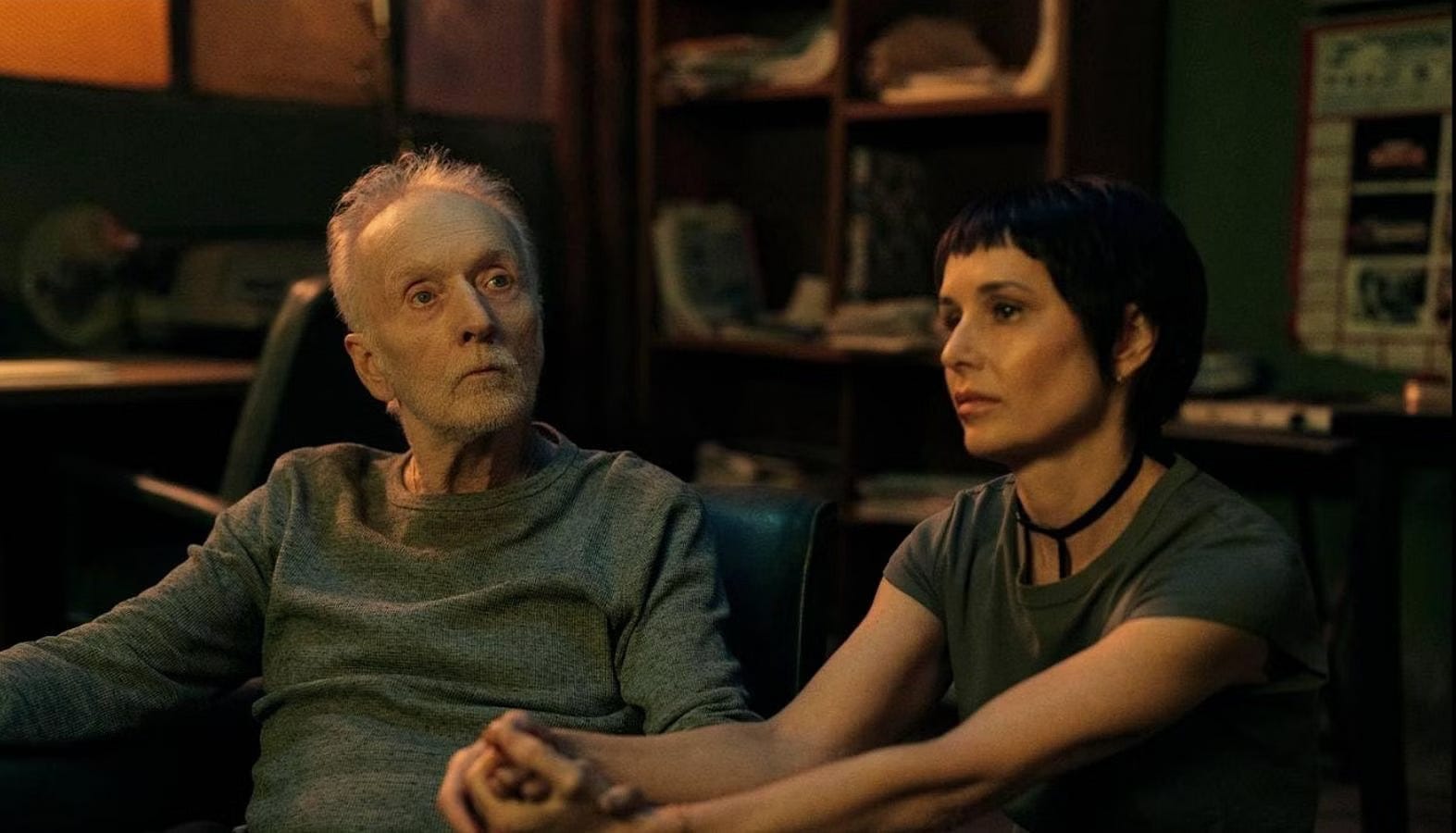
Is Saw pro-torture?

In Saw, dying serial killer John Kramer traps tough-as-nails addict Amanda Young in a jerryrigged reverse bear-trap contraption. She escapes, and later credits Kramer with ‘saving’ her.

In Saw II, Amanda is kidnapped and tortured by Kramer again – until we realize that she’s since been groomed into being Kramer’s accomplice. She survives a pit of syringes to continue her role as his loyal assistant, and successfully guides victims through their games.

But in Saw III, we see the tragic ends of her loyalty. Amanda loses faith in John’s methods, and starts to rig unwinnable games. From her perspective, John isn’t actually ‘rehabilitating’ people anymore. The only way to fix society, she’s convinced, is to selectively put people down like sick animals. Their conflicting tensions result in a terse stand-off that leaves both of them – and all of their victims of III dead in a haunting final shot.

So – is Saw pro-torture?

Tuesday, August 25, 2026

rape! hold the revenge

Thoughts on "Rape!" (1976) and the honesty of sexual violence in Nikkatsu Roman Porno

In Western films, rape victims are often either vengeful or vegetative.

Savage Streets paralyzes Linnea Quigley’s character to make way for Linda Blair’s righteous kills. I Spit On Your Grave elevates its central survivor’s agony to mythical proportions, an approach taken by later films such as Revenge. Don’t Breathe and Barbarian use sexual violence as both plot device and gross-out shock effect that incapacitates or transforms victims; Saint Maud and Promising Young Woman both lay out two very different but ultimately self-destructive ends of the act itself. Varda also indulges in this misery with Vagabond, as it’s part of a larger tragedy that culminates in her heroine’s demise, even if the director manages to instill a larger sense of resilience and grit in her.

Sunday, August 23, 2026

colonized bodies, living and dead


thoughts on ‘Nun in Rope Hell’ (1984), Korean annexation at the hands of Imperial Japan, and the political apparatus of erotic grotesque nonsense. 

After an opening scene of S&M that sees a rose stem refashioned as a whip, Nun In Rope Hell (1984) brings viewers to the Kadowaki Suspension Bridge. I recognized it as a climactic set piece in horror sequel Sadako 3D 2 (2013), but it’s also been featured in Koji Shiraishi’s Occult (2009.) Located in the Shizuoka prefecture, the bridge is suspended right above the Jogasaki Coast. Both from the side and on the bridge itself, the view is astonishing – albeit somewhat terrifying.

This is an appropriate setpiece for director Katsuhiko Fujii and cinematographer Teio Noda to open on. Nun In Rope Hell is as mystifying as it is scary – and twice as erotic by any measure. Fujii pushes major boundaries for not only what a theatrical pink film could show by 1984, but the limits of contemporary rope play. Through artful shot composition and imaginative mise en scene, the film elevates the human body to a work of art in sublime form. Like the Kadowaki Bridge, the weight of this picture rests on the suspended backs of the actresses.

Friday, August 21, 2026

new american extremity


Historically, the Evil Dead franchise is not a political powder keg.

The first three films are a time lapse in watching young professionals hone their craft through gory homage and pastiche. They're bonafied classics, yes, but hard-hitting social commentary wasn't on Sam Raimi's mind. Together with Rob Tapert and Bruce Campbell, Raimi wanted give every last ounce in his tank to shock audiences and make them laugh. Over 40 years later, he continues to succeed.

Greetings From Gatlin, Nebraska


Two weekends ago, I was doing research for Cinema Cauldron and found myself on Bloody Disgusting. At the bottom of the page, an image of a little girl holding a bloody sickle caught my eye. Below her - that Stephen King font that Stranger Things brought back in vogue. You know, the same one they used for Firestarter last year? 

Anyway. The ad was for a new Children of the Corn, which I was totally in the dark about until that very moment. But I had to see it.

I'm a slavish devotee to seeing any new Stephen King adaptation. Then I found out it was only in theaters for 16 days - and disappearing from most of our local cineplexes within a couple of days. 

Thursday, August 20, 2026

what Saw says about America's relationship to torture


Saw and Hostel are both cultural nadir incarnate. What I mean by that is that most people have a preconceived notion of both series based on what they’ve been told about them.

They’re the poster children for the ‘torture porn’ sub-genre, which tends to be classified as inherently misogynistic and excessively violent. By consequence, both Lionsgate series are often dismissed as pure exploitation and nothing more. Some folks in the horror community even refer to them as ‘bro horror.’

But when viewed today, it’s difficult to just write either series or their numerous imitators off as, well, just that.

"MAGA wrestling" in the "city on fire"

I smell Skoal. When you grow up in the South, you're used to that musky, acidic tang. It's in and outside your gas stations, or on y...